SURF INDUSTRY: The Great Disconnect
Another day, yet another small business folding, and the surf industry isn’t exempt, the surf industry is feeling it more than ever. So WTF is happening?
I opened up instagram today to see another post from a small, independently run surf zinc business announcing “We are Closing”. After 7 years of dedication to a product that was not only well developed but had a key focus on natural ingredients, low impact packaging and reef safety, it all came to an abrupt end. They had all the key ingredients for success, all the things that people claimed to want, all the things that everyone deemed to be important and all the things that would move the needle in terms of sales.
But…nope. Despite this business owner pouring everything she had into this company and delivering everything the consumer claims to want in a product, it still wans’t enough.
The Insta post goes on to discuss industry pressures for small business owners and the constant demand to “grow bigger, faster and louder, just to keep up”. Combine this with the increasing cost to manufacture a values driven product and the “hidden” cost of running a business, the numbers just don’t add up.
Then there’s the labour requirements. Business like this is often run by a single individual, maybe 2. They’re the CEO, the developer, the marketer, the buyer, admin, accounting, social media manager, the list is endless. Margins often don’t allow enough breathing room to employee people to take on these tasks, so it all falls with that single individual.
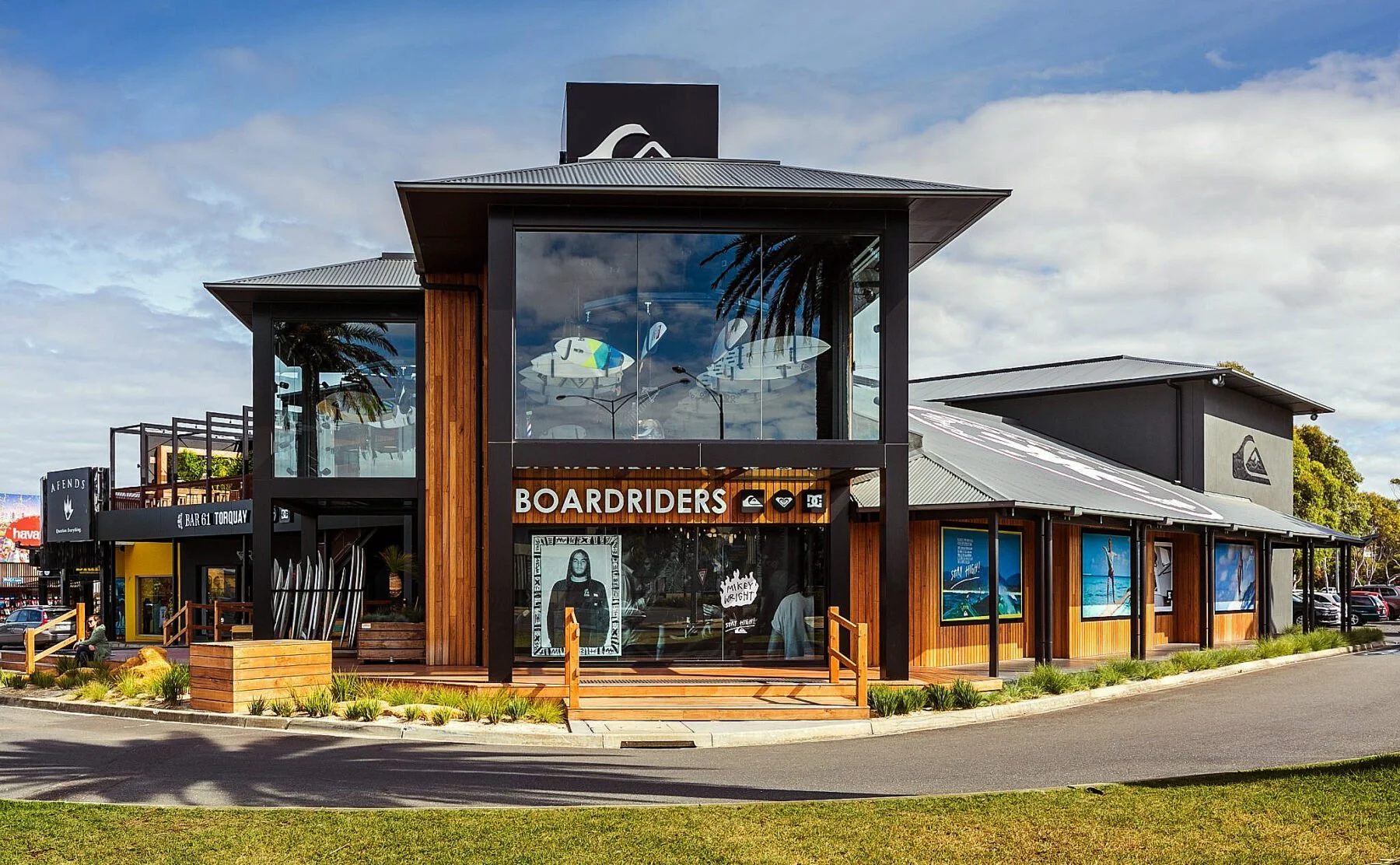
Big Corporate surf retail, Torquay Australia
The big corporate surf industry is not immune to the current economic climate either. A quick google search reveals that major brands have struggled to maintain the status quo since as early as 2013. Big corporate brands suffered massive losses into the Billions that has seen a shift in the industry ever since. Forward to 2020 and the COVID pandemic, where every man and their dog seemed to take up surfing. The line up was crowded as people sought out their daily “exercise” during lengthy lock down periods. The industry was “booming”, or so everyone thought. Over all, long term participation in water sports seemed to remain steady after we moved on from the pandemic, but the industry didn’t come out on top.
In early 2025 Liberated Brands, the parent company for the surf giants like Quicksilver, Billabong and Volcom filed for bankruptcy and announced the closure of over 100 US bricks and mortar stores. They also laid off over 1000 employees in the process. Despite the increased demand for surf gear off the back of COVID, the industry continues to slowly spiral downward. Perhaps the acquisition of traditional core surf brands by big parent companies was not a good move for the industry as a whole. But money talks, until it doesn’t….
As a consequence of this downward trajectory we have also seen a shake up with athlete sponsorships in recent years. From Surfing to bodyboarding, no surf style is immune to the current state of affairs. From 2023 to today there have been major cuts to sponsorship budgets which has seen long term relationships severed and many big name athletes part ways with their respective sponsors. From Italo to John John and female surfers like Isabella Nicholls, Google dubs 2023 as the “sponsorship cliff”. This led to a direction change for many professional surfers and many sought financial assistance and sponsorship from business and brands outside the surf industry. Whilst this was seemingly necessary for the surfers themselves, it’s yet another nail in the coffin for the surf industry as a whole.
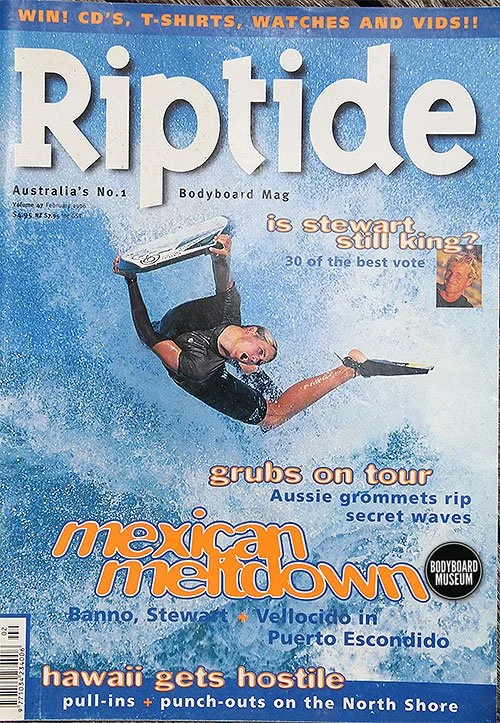
A Riptide Magazine cover from 1996
The bodyboarding industry has had its own set of challenges. Whilst bodyboarding has never had the level of clout or financial backing that surfing has, it was still a legitimate sport for many years. From the 1980-2000s bodyboarding had a huge following. There was sponsored pro riders, films, magazines, and a rise in bodyboard specific brands. Now you could ask any booger over the age of 30 what they think went wrong and each of them will have a slightly different take on it all. But one thing is clear, the bodyboarding industry functions today off the back of a few key stakeholders that run on the “love and dedication” they have for the sport. But this is perceived by many as a “strong hold” on an industry that desperately wants to spread its wings and fly.
So how did we end up here?
It’s a combination of factors. First and foremost, it’s worth acknowledging that the surf industry has largely sold out to big corporate, private equity companies that work off spread sheets and industry trends. They have no experience in the water and have no appreciation for what drives the everyday surfer. There is a disconnect between the industry and the core consumer. There is also a constant need to make incredibly functional products unnecessarily more “tech”, a change the consumer may not need or want! (Am I right?)
Combine this with rising costs for manufacturing, a shift in consumer habits, social media, online shopping, and what feels like a constant “SALE” state, the industry is hanging on by a thread.
It’s also worth mentioning that doing business in Australia is particularly challenging. Consumers “prioritise” Australian Made products but anyone that’s tried to make anything in Australia quickly begins to realise that it’s not sustainable. Absorbing the cost of manufacturing will see you go out of business in about 0.52 seconds and passing the cost onto the consumer will more often than not price you out of the market.
Consumer priorities have also changed in the current economic climate. Well meaning and conscious purchases are no longer a priority, value for money is where it’s at.
So what happens now?
As the owner and operator of an independent surf store I have learnt a few things about small business over the last few years. Staying true to the course (if you can) is important. Staying in your lane and not comparing yourself to others is important. Not overcapitalising is important, especially in the current economic climate. Not bending to the perceived pressure to be “bigger, faster and louder, just to keep up” and being selective about the type of people and brands you partner with all contribute to a sustainable business model.

The cover of The Rip Curl Story by: Tim Baker
Big corporate surf needs to go back to its roots. We need a major reset that brings us back to the origin stories of those sold out brands. If you’ve ever read the book “The Rip Curl Story” By Tim Baker, you’d be hard pressed not to get nostalgic and yearn for surfing to go back to its roots and find itself again. There is some hope though, with a surge in rider funded and operated core brands that are using their social media presence to fuel demand. However, even some of these brands find the allure of world domination hard to pass up and often end up Selling out, so to speak.
The industry as a whole needs to find a way to work within the modern landscape without loosing its core values. It needs to find a way to be profitable without selling out to private equity. It needs to hit the reset button.
Not an easy task, but as with most things in life, it will either go full circle, or completely crash out….hopefully it’s the former.
Words by: Pylie Kalmer
*This is an opinion piece using information gathered through instagram posts and basic google searches. All information is available on public record. Chat GPT was NOT used to write this article! (Trad)